Simms Tributary Rubber Sole Wading Boots for Men and Women - Rugged Fishing Shoes with Ankle Support Review (2026)
Updated September 14, 2026 · Research-based review
Our verdict
The Tributary swaps felt for a thick, stud compatible rubber outsole on a synthetic leather and mesh upper with a rubber toe cap, giving Simms level construction at a lower price point than their premium boots. Rubber sidesteps felt bans but grips slick rock less confidently without added studs. Our score of 8.6 out of 10.
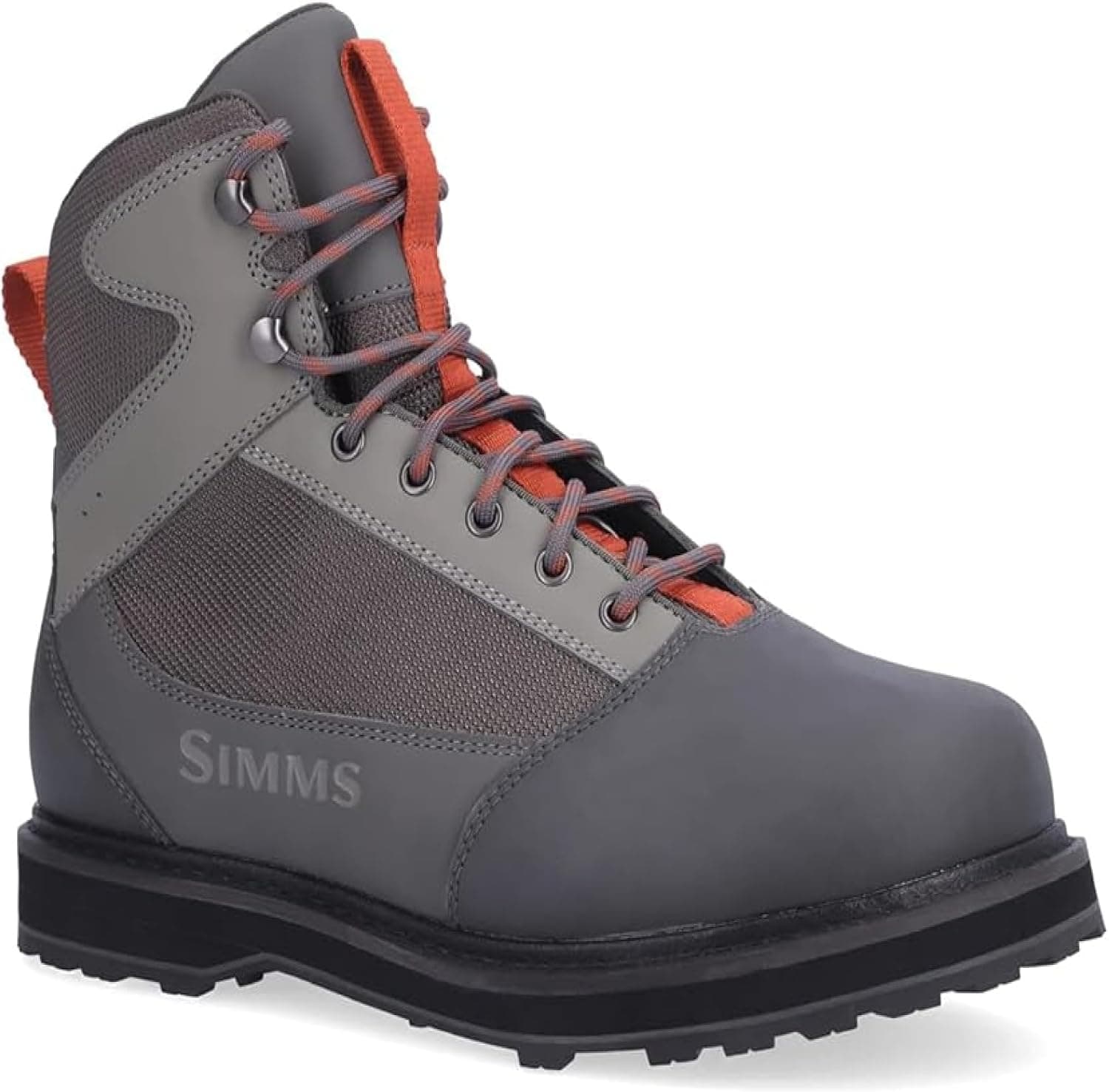
Simms Tributary rubber sole wading boots for men and women, a rugged, affordable Simms boot with ankle support.
Price range: $ (Budget)
What we liked
- + Rubber sole avoids felt bans and does not hold invasive organisms
- + Ankle support helps on rocky, uneven river bottoms
- + Simms quality at the lower end of their price range
Trade-offs
- - Plain rubber grips less than felt on slimy rocks
- - Add clip-on studs separately for extra grip on slick rocks
Who the Tributary is for
This boot is built for anglers who need or prefer rubber soles, whether because felt is restricted where they fish, or because their trips mix wading with hiking, boat decks and muddy banks where rubber holds up better than felt. Simms markets the Tributary as an accessible entry into their boot lineup, so it suits someone who wants Simms fit and durability without paying for their higher end models. The extra wide EEE fit is designed to comfortably fit over a wader stockingfoot, which matters for anglers who have struggled to size boots correctly around bulkier wader booties in the past. Both men's and women's specific versions are offered, so sizing can be matched to the wearer rather than relying on a single unisex last.
Build and materials
The upper combines synthetic leather and mesh with scratch resistant rubber overlays in the areas that take the most abrasion from rock and brush. A fully gusseted tongue keeps sand and grit from working into the boot while wading, paired with a full neoprene lining that adds comfort and helps the boot go on and off more easily over a wader foot. A durable rubber toe cap wraps the front of the boot to protect toes from rock strikes, a detail not every rubber sole competitor includes. Underfoot, Simms uses a thick traction rubber outsole that is compatible with their Hardbite stud system, so anglers who need more grip on slick rock can add metal studs rather than switching to a felt boot. A size 11 pair weighs about 50 ounces, noticeably lighter than the felt soled Freestone.
Traction and everyday use
Plain rubber without studs grips drier rock, gravel, mud and boat decks better than felt, but it can feel less secure than felt on algae slicked rock in moving water, which is the classic tradeoff between the two sole types. Anglers heading into rivers with heavy slime growth often add Hardbite studs to close that gap, since the outsole is built to accept them. Because rubber does not hold water and organisms the way felt fibers can, it also avoids the felt bans now in place in several states, which simplifies travel between different fishing regions. The gusseted tongue and full neoprene lining make the boot comfortable for long days, and the rubber toe cap holds up well to the kind of rock scrambling that wears down a plain fabric toe faster.
How it compares with other rubber sole boots
In the site's rubber sole wading boots guide this pair ranks third out of eight, behind the Korkers Greenback with its interchangeable stud and Kling-On soles, and behind the Simms Freestone rubber sole version, a step up in the same product family. The Orvis Clearwater, offered in both men's and women's fits, scores close behind with a synthetic leather upper similar in concept to the Tributary. Budget options from Frogg Toggs trail further down, typically without the gusseted tongue or rubber toe cap this boot includes. For anglers who want Simms build quality at a lower price than the Freestone rubber sole, the Tributary is the more value focused choice within the group.
Bottom line
Choose the Tributary if you want a Simms rubber sole boot at a more accessible price than their higher end models, especially if your trips mix wading with hiking or boat time where rubber outperforms felt. Add Hardbite studs before a trip to rivers with heavy algae growth, since plain rubber alone grips less confidently than felt on that kind of surface. Anglers who want more sole flexibility should look at the Korkers Greenback with its swappable outsoles, while those who mostly wade slick, rocky rivers and are not affected by felt restrictions may still prefer the felt soled Freestone instead.
Frequently asked questions
Why choose rubber soles over felt?
Rubber avoids felt bans in states that restrict felt soles and grips mud, boat decks and dry rock better, though it needs studs to match felt's grip on slick, algae covered rock.
Can I add studs to the Tributary?
Yes, the outsole is compatible with Simms Hardbite boot studs, which improve traction on slippery riverbeds without switching to a felt sole.
What is the fit like?
Simms builds the Tributary in an EEE extra wide width designed to fit comfortably over a wader stockingfoot, with separate men's and women's versions.
How much does a pair weigh?
A size 11 pair weighs about 50 ounces, lighter than the felt soled Simms Freestone at roughly 58 ounces.
Prices change often, so check the current price and availability on Amazon.
Check price on AmazonFly Fish Nest may earn a commission from the link above.