Korkers Greenback Wading Boots - Includes Interchangeable Kling-On and Studded Kling-On Soles Review (2026)
Updated September 14, 2026 · Research-based review
Our verdict
This Greenback pairing skips felt, giving you Kling-On rubber for boat decks and trails plus studded Kling-On for grip on slick, algae covered rocks, on Korkers' swappable OmniTrax sole system. Studs help on wet stone but can mark soft drift boat floors if left on, and swapping soles takes some care. Our score of 9.0 out of 10.
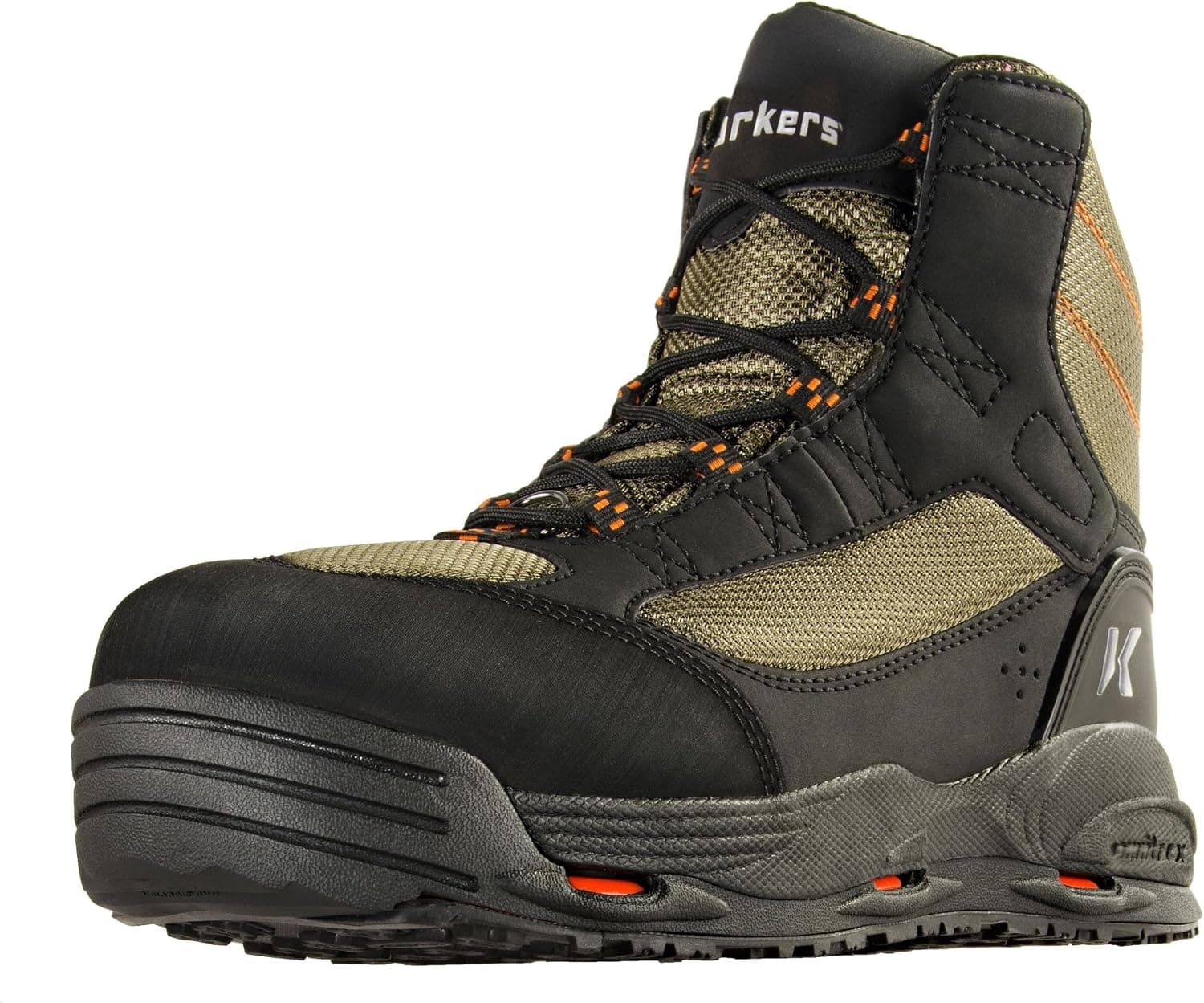
Korkers Greenback wading boots with interchangeable Kling-On and studded Kling-On soles, a rubber sole traction system.
Price range: $ (Budget)
What we liked
- + Studded Kling-On sole grips slick rocks without felt
- + Swap to plain Kling-On for boat decks and trails
- + Rubber-only setup works where felt is banned
Trade-offs
- - Studs can scratch drift boat floors if not swapped out
- - Sole swapping requires care to lock in correctly
Who this rubber sole pairing fits
This version of the Greenback is aimed at anglers who wade rocky, algae covered rivers where rubber soles alone struggle for grip, and who also want to avoid felt entirely, whether for invasive species reasons or because felt is restricted where they fish. Pairing plain Kling-On rubber with a studded Kling-On option means you get a low traction sole for boat decks, trails, and pavement plus a higher traction studded sole for the riverbed itself, switching between the two as your day moves between driving, hiking, and wading. Anglers who mostly wade sandy or gravel bottomed rivers with less algae may not need the studded sole as often and could do fine with a simpler single sole rubber boot instead. This pairing suits people who specifically want to stay rubber only across both soles rather than keeping a felt option in reserve.
What the studs actually do
The studded Kling-On sole adds metal or carbide studs into the rubber tread, which bite into slick, algae covered rock in a way that plain rubber alone cannot match, closing much of the traction gap that rubber soles have against felt on that kind of terrain. Both soles use Korkers' OmniTrax interchangeable system, so switching from studded to plain Kling-On does not require a different boot, just a different sole locked into the same midsole mount. According to the manufacturer, the boots use hydrophobic materials in the upper to speed drying and reduce the spread of invasive species between waterways, with abrasion resistant construction and reinforced seams aimed at handling regular wading wear. Traditional laces with reinforced web loops secure the boot, a simple, dependable closure rather than a dial based system.
Living with studs and swappable soles
Save the studded sole for actual wading on rock or algae, and switch to the plain Kling-On sole before walking on hard trails, boat decks, or gravel lots, since studs wear down faster on hard, abrasive surfaces than they do gripping wet stone. If you fish from a drift boat, swap off the studded sole before stepping aboard, since the studs can scratch or dent a soft boat floor if left on. Swapping soles takes a bit of practice to seat the OmniTrax lock fully, so it is worth doing a few practice swaps at home rather than fumbling with it streamside for the first time. Rinse both soles after each trip and let them dry fully before storing the spare, since trapped moisture and grit can accelerate wear on the stud mounts over time.
How it compares to other rubber sole boots
In the site's rubber sole wading boots guide, this pairing ranks first out of eight, just ahead of Simms Freestone rubber sole boots at 8.9 and Simms Tributary at 8.6, both fixed sole boots without the same swap between plain and studded rubber. Orvis Clearwater boots for men and women follow at 8.4 each, offering a synthetic leather upper and rubber sole but without an interchangeable system, while a budget Frogg Toggs option rounds out the list at 7.8 with a choice between sticky rubber and felt rather than studded traction. What separates this Greenback pairing from the higher priced Simms boots is the ability to swap in studs specifically for slick rock days, a feature none of the fixed sole rivals in the guide include.
Verdict and who should pick differently
Choose this pairing if you want to stay felt free while still having a dedicated high traction option for slick, algae covered river rock, and you are comfortable swapping soles before switching terrain. It leads the site's rubber sole wading boots guide by combining that flexibility with Korkers' durable, fast drying build. Anglers who wade mostly sandy or gravel rivers, or who rarely encounter slick rock, may find a simpler fixed rubber sole boot like the Orvis Clearwater lighter and less fussy day to day. Anyone who still wants felt as an option for certain rivers should instead look at the felt and Kling-On version of this same Greenback boot, which swaps rubber for felt rather than adding studs.
Frequently asked questions
Do these boots include felt soles?
No, this pairing includes only Kling-On rubber and studded Kling-On rubber soles, with no felt option, aimed at anglers who want to stay rubber only.
Will the studs damage a drift boat floor?
They can, so it is best to swap off the studded sole for the plain Kling-On sole before stepping onto a soft boat deck.
How do I switch between the two soles?
Both soles use Korkers' OmniTrax locking system, letting you detach one sole and click in the other without tools, though it takes some practice to seat the lock fully.
Are studded soles legal everywhere?
Rules on studded soles vary by location and by boat or ramp policy, so check local regulations and any boat owner's rules before wading or boarding with studs attached.
Prices change often, so check the current price and availability on Amazon.
Check price on AmazonFly Fish Nest may earn a commission from the link above.