How to Find and Fix a Leak in Your Waders
Few things end a fishing day faster than cold water trickling into your waders. Breathable waders eventually develop leaks from thorns, barbed wire fences, sharp rocks and worn seams, especially around the crotch and inner thighs where fabric rubs with every step. Not every damp sock means a leak, though, so the first job is working out whether water is coming in or sweat is condensing inside. Once you find a real leak, most can be repaired at home.
Leak or condensation?
Breathable waders let water vapour escape, but on hard hikes, warm days or in very cold water, sweat can condense on the inside faster than it breathes out. Condensation usually makes the whole lower half feel clammy, often along the legs and around the feet, rather than creating one cold wet patch.
A real leak tends to leave a distinct wet area that appears quickly and feels colder than the surrounding fabric, often on the knees, crotch, seams or booties. Wearing moisture-wicking layers rather than cotton reduces condensation and makes true leaks easier to identify.
Find leaks with rubbing alcohol
Turn the waders inside out and dry them completely. Spray or dab isopropyl rubbing alcohol onto the inside of suspected areas, a small section at a time. Alcohol passes through pinholes and appears as a dark spot on the outside fabric.
Mark leaks with a waterproof marker as soon as they appear, since spots disappear quickly as alcohol evaporates. Check seams, knees, booties and the crotch carefully, since most leaks occur there.
Try the water test for larger leaks
Filling the legs with water outdoors or in a bathtub can reveal larger leaks by showing where drips come through. Hang waders carefully so the weight of water does not stress seams.
Water testing is less precise for tiny pinholes and requires thorough drying afterwards. Use it mainly when the alcohol method does not reveal the leak.
Repair pinholes and small tears
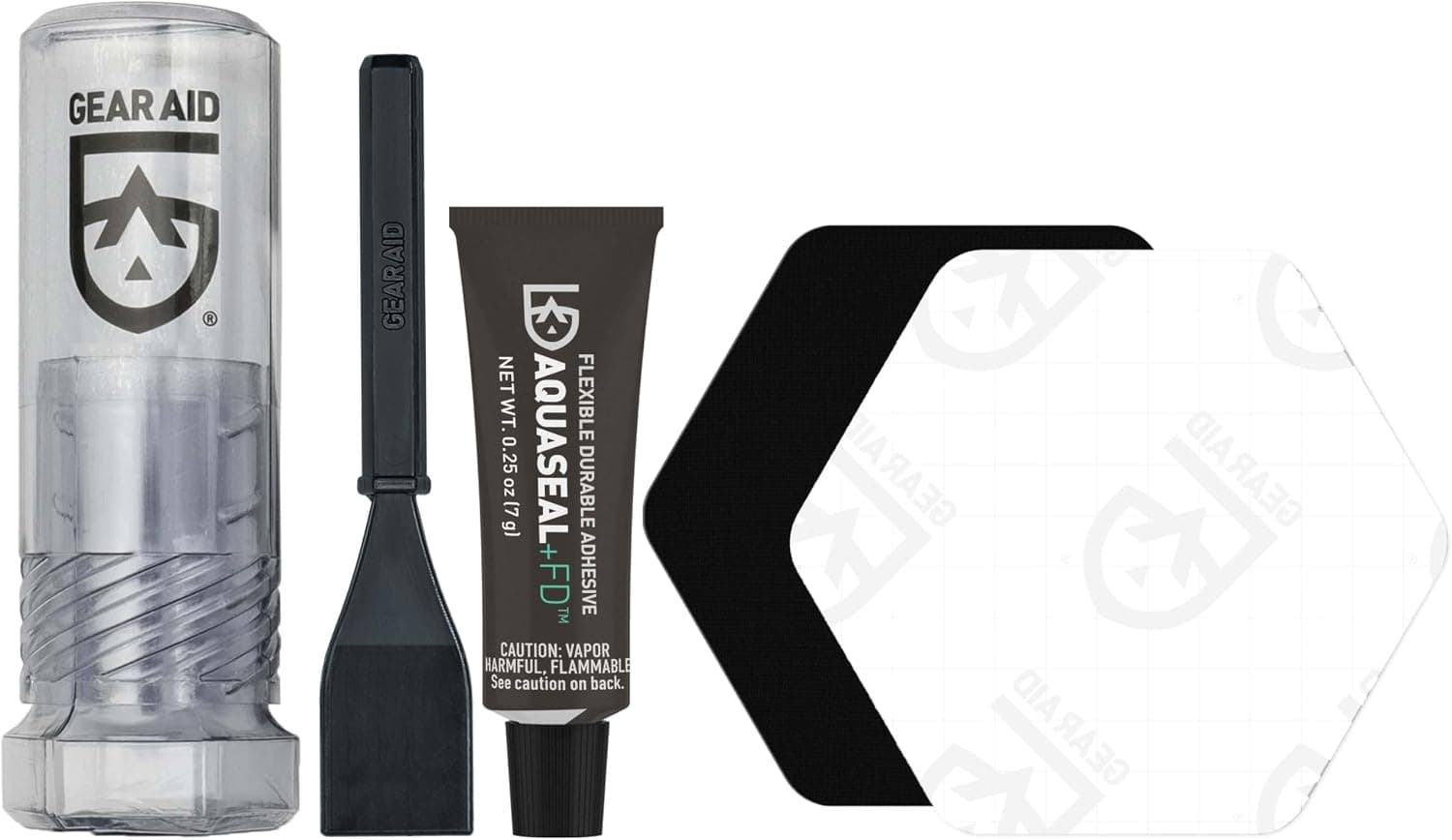
Clean the area with rubbing alcohol and let it dry. Apply a urethane-based wader repair adhesive to the inside of pinholes, spreading a thin layer slightly beyond the hole, and follow cure times on the product.
For small tears, use a patch from a wader repair kit on the inside with adhesive, and optionally reinforce the outside. UV-curing repair products are convenient on the river for quick fixes.
Fix seam and bootie leaks
Seams are common leak points as tape ages. Apply seam sealer or wader repair adhesive along the leaking section, working it into the seam and allowing proper cure time.
Neoprene booties can crack or tear at flex points. Neoprene-compatible adhesives and patches work best, and large bootie failures may require professional repair or warranty service.
Prevent future leaks
Dry waders fully after use, hang them by the boots upside down and store them away from sunlight and heat. Avoid storing folded or crumpled for long periods.
Wear gravel guards, avoid kneeling on sharp rocks and climb fences carefully. Wash waders occasionally with manufacturer-approved cleaners to maintain breathability.