Simms Freestone Felt Sole Wading Boots, Felt Bottom Fishing Boots, Gunmetal Review (2026)
Updated September 14, 2026 · Research-based review
Our verdict
The Freestone pairs a waterproof synthetic leather upper with a 12mm felt outsole built for grip on algae covered river rock, backed by Simms's dual density EVA midsole and reinforced toe and heel. Felt grips wet rock well but is banned in some states and can be slick on mud or snow. Our score of 8.6 out of 10.
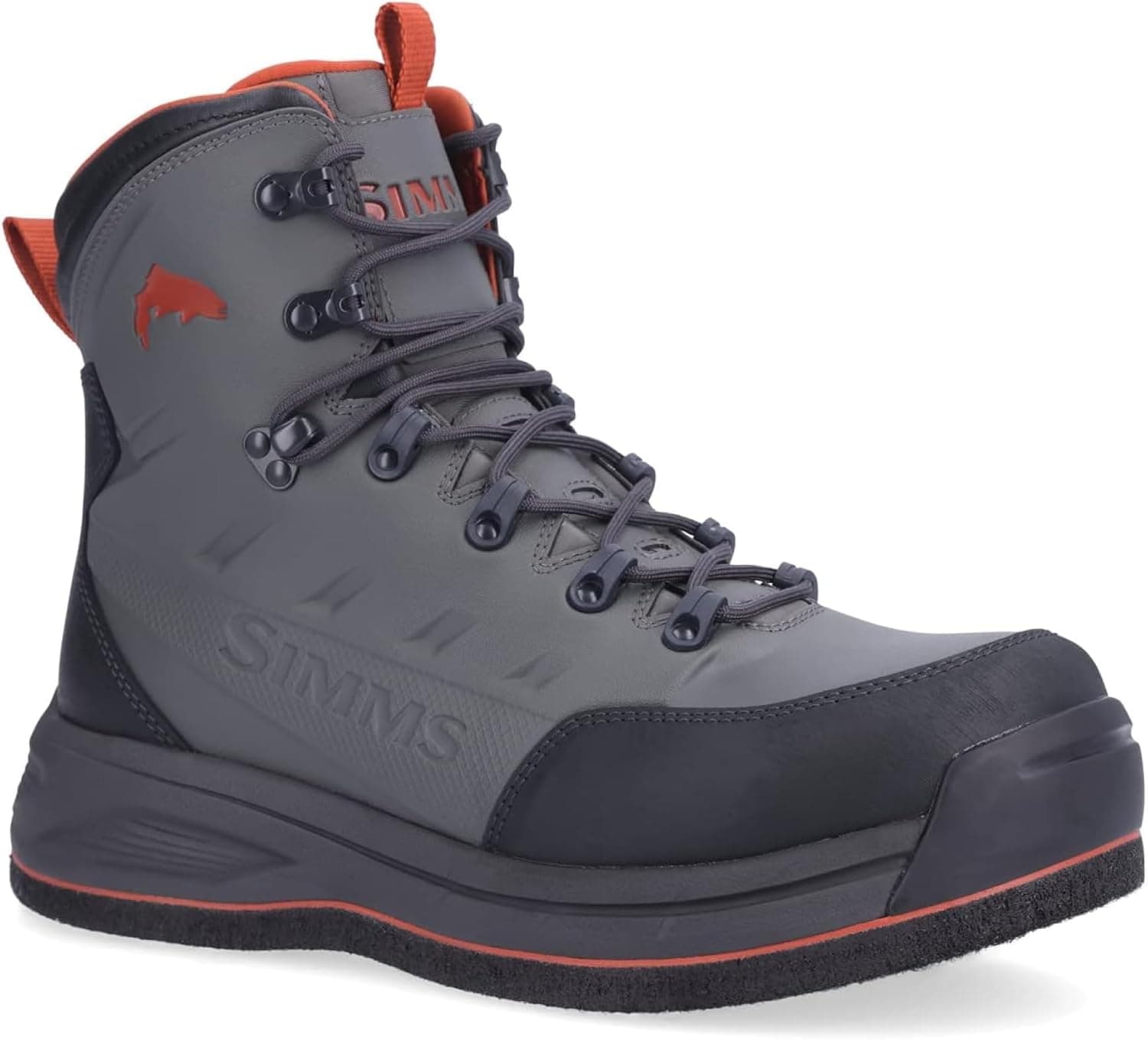
Simms Freestone felt sole wading boots in gunmetal, a durable, supportive boot for slippery trout river rocks.
Price range: $ (Budget)
What we liked
- + Felt bottom grips algae-covered rocks better than most rubber
- + Simms Freestone build offers strong ankle support for rough wading
- + Durable materials hold up to seasons of regular use
Trade-offs
- - Felt is banned in some states and spreads invasive species if not cleaned
- - Felt soles are slippery on muddy banks and snow
Who the Freestone fits
This boot suits wade anglers who spend most of their time on rocky freestone rivers where algae and slime coat the streambed, since felt outsoles generally grip that kind of surface better than plain rubber. Simms positions the Freestone as an entry point into their wading boot line, so it fits someone who wants Simms level construction and support without stepping up to their premium boots. The waterproof synthetic leather upper means the boot does not soak up and hold water the way a full leather boot would, which keeps it noticeably lighter after a few hours of wading. Anglers who fish states where felt soles remain legal, and who prioritize traction on slick rock over hiking to and from the water, are the clearest fit for this boot.
Construction and materials
The upper is a waterproof, synthetic scratch leather with reinforced toe and heel panels to resist abrasion from rock scrambling and wading in and out of vehicles. A partial neoprene lining wraps the ankle area, which makes the boot easier to pull on and off over a wader stockingfoot and adds a bit of cushioning at the collar. Underfoot, Simms uses a dual density EVA midsole, a firmer layer for support paired with a softer layer for comfort, rather than a single density foam. The outsole is a 12mm felt sole that is compatible with Simms Hardbite Felt Studs, so anglers who want extra bite on slick rock can add metal studs later rather than buying a different boot. A full pair in size 11 weighs about 58 ounces.
Living with felt in the field
Felt soles excel at gripping algae slicked rock in moving water, which is the main reason anglers still choose them over rubber despite the tradeoffs. The same fibers that bite into wet rock hold almost no traction on mud, wet grass, boat decks or snow, so a felt boot demands more caution on the walk to the river than a rubber soled boot would. Felt is also known to trap and transport aquatic organisms and invasive species between waterways more easily than rubber, which is why several states restrict or ban felt soles outright, so checking local regulations before buying is worth doing. Rinsing and drying boots between different rivers is standard practice for felt sole owners for this reason, on top of general upkeep like loosening laces to dry the neoprene lining fully.
How it stacks up against other wading boots
In the site's wading boots guide this pair ranks second out of eight, behind the Korkers Greenback, which includes interchangeable felt and Kling-On rubber soles so an angler is not locked into one traction type. The Redington Willow River, a women's specific felt boot, scores close behind at a similar build quality but lighter overall construction. Budget options from Frogg Toggs trail further down the list, generally trading away the reinforced upper and dual density midsole that Simms includes here. For anglers who want Simms level durability specifically with felt traction, and are not concerned about felt restrictions in their area, this pairing is hard to beat within the group.
Bottom line
Pick the Freestone felt sole if you fish rocky, algae covered rivers regularly and live where felt soles are still legal, since the grip advantage on slick rock is real and the Simms build quality backs it up. It is not the boot to reach for if your trips involve much walking on mud, snow or boat decks, where felt loses most of its advantage over rubber. Anglers who want the same boot with more sole flexibility should look at the Korkers Greenback with its swappable sole system, while those facing a felt restriction should consider the Simms Tributary or Freestone rubber sole instead.
Frequently asked questions
Is felt sole legal everywhere?
No, several states restrict or ban felt soled wading boots to slow the spread of invasive species, so check local fishing regulations before buying.
Can I add studs to the Freestone felt sole?
Yes, the 12mm felt outsole is compatible with Simms Hardbite Felt Studs for added traction on especially slick rock.
How much does a pair weigh?
A size 11 pair weighs about 58 ounces, or roughly 1644 grams, according to Simms.
Does the upper stay dry while wading?
The upper is a waterproof synthetic leather that does not absorb and hold water the way natural leather does, so it stays lighter through a day on the water.
Prices change often, so check the current price and availability on Amazon.
Check price on AmazonFly Fish Nest may earn a commission from the link above.