Korkers Greenback Wading Boots - Includes Interchangeable Felt and Kling-On Soles Review (2026)
Updated September 14, 2026 · Research-based review
Our verdict
Korkers Greenback boots use the OmniTrax system to swap between felt and Kling-On rubber soles, letting one boot handle slick river rock and felt banned waters alike. That flexibility comes with a learning curve for locking soles in securely and extra weight versus a fixed sole boot. Our score of 9.0 out of 10.
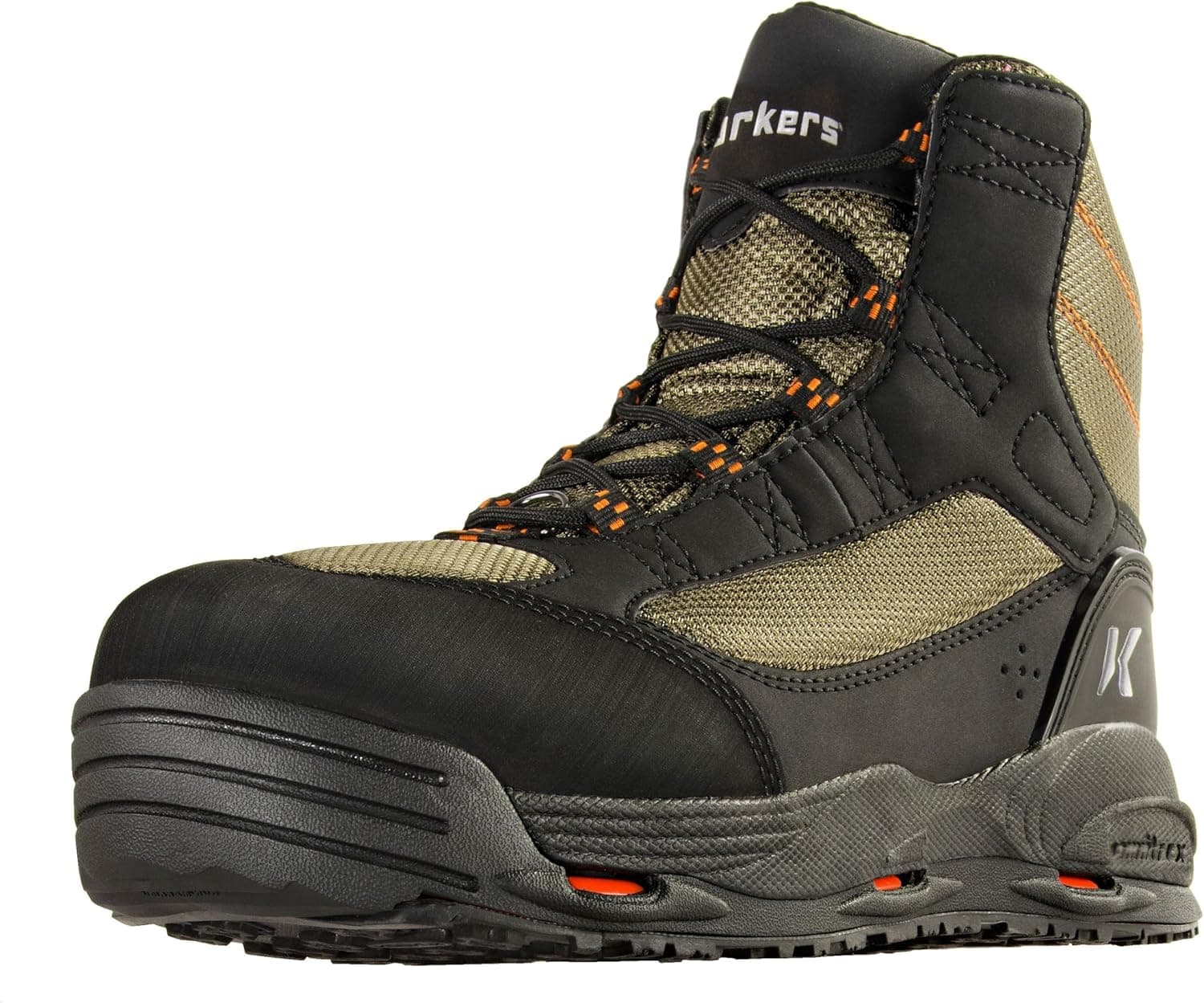
Korkers Greenback wading boots with interchangeable felt and Kling-On soles, a versatile boot for mixed river bottoms.
Price range: $ (Budget)
What we liked
- + Swap between felt and Kling-On rubber soles to suit each river
- + Interchangeable soles help comply with felt bans in some states
- + Korkers system saves buying two separate pairs of boots
Trade-offs
- - Sole swapping takes practice to lock in securely
- - Heavier than simple fixed-sole budget boots
Who these boots are built for
These boots suit anglers who fish a mix of water types across a season, from mossy freestone rivers where felt still grips best to states or waters where felt soles are restricted or banned outright. Rather than owning two separate pairs of wading boots, the Greenback lets you carry one boot and one spare sole in your pack, swapping between felt and Kling-On rubber depending on where you are fishing that day. This is especially useful for traveling anglers who fish different regions on the same trip, since regulations and river bottoms vary widely from one watershed to the next. Anglers who fish the same water type every time, with no need to switch, may find a simpler fixed sole boot lighter and less fussy to own.
How the sole system works
Korkers' OmniTrax system is the core feature here, using a locking mechanism at the boot's midsole that lets you detach one sole and click in another without tools. This boot ships with both a felt sole and a Kling-On sticky rubber sole included, so you get two traction options out of the box rather than buying a second sole separately. According to Korkers, the boots stand about 7 inches tall and weigh roughly 2 pounds 8 ounces per pair in the felt sole configuration, with hydrophobic synthetic leather and textile uppers designed to dry faster and reduce the spread of invasive species between waterways. Internal drainage channels route water out through midsole ports, which helps shed water weight as you wade rather than carrying it with every step.
Living with swappable soles
Traditional laces with reinforced web loops handle the closure, a straightforward system that is easy to snug down tight but not as fast to put on as a quick pull dial system found on pricier boots. Swapping soles takes a bit of practice at first, since the OmniTrax lock needs to seat fully and click into place, and rushing the swap can leave a sole slightly loose, so it is worth practicing at home before you rely on it streamside. Because felt soles absorb and hold water, expect noticeably more weight underfoot when wet compared to the Kling-On rubber option, which sheds water faster and dries quicker between trips. Rinse and dry both soles after each outing, and store the spare sole somewhere it can dry fully, since a damp felt sole left packed away is more prone to holding odor and breaking down over time.
How it compares to other wading boots
In the site's wading boots guide, the Greenback ranks first out of eight, ahead of Simms Freestone Felt Sole boots at 8.6 and Redington's Willow River felt boot at 8.4, both of which use a fixed felt sole rather than an interchangeable system. Budget oriented felt boots from Frogg Toggs and Kylebooker fill out the lower half of the list, scoring between 7.4 and 7.8, generally trading the swap sole flexibility and reinforced build of the Korkers system for a lower price point. What sets the Greenback apart from all of these rivals is simply the ability to change sole type on the same boot, which none of the fixed sole competitors in the guide offer.
Verdict and who should pick differently
Choose this boot if you fish varied water and want one pair that can switch between felt grip and rubber traction rather than owning two separate boots. It tops the site's wading boots guide for combining that flexibility with a reasonably durable, fast drying build. Anglers who only ever fish one water type, and never need to switch sole styles, may get better value and less bulk from a simpler fixed sole boot like the Simms Freestone or Redington Willow River. Anyone fishing exclusively in states where felt is banned should also look at the Kling-On and studded Kling-On version of this same Greenback boot, which skips felt entirely in favor of two rubber sole options.
Frequently asked questions
Can I switch between felt and rubber soles on the same boot?
Yes, the OmniTrax system lets you detach and swap the included felt and Kling-On soles without tools, so one boot covers both traction types.
How much do these boots weigh?
According to Korkers, the boots weigh roughly 2 pounds 8 ounces per pair in the felt sole configuration, heavier than a simple fixed sole boot.
Is felt legal to use where I fish?
Felt soles are restricted or banned in some states and regions to help prevent spreading invasive species, so check your local regulations before using the felt sole on this boot.
What closure system do these boots use?
They use traditional laces with reinforced web loops rather than a dial based closure, which keeps costs down but takes a bit longer to put on than a quick pull system.
Prices change often, so check the current price and availability on Amazon.
Check price on AmazonFly Fish Nest may earn a commission from the link above.