Gehrke's Gink Dry Fly Dressing and Leader Floatant Review (2026)
Updated September 14, 2026 · Research-based review
Our verdict
Gehrke's Gink suits any dry fly angler who wants a simple gel floatant that also doubles as a leader dressing. The main strength is how deeply the gel works into hackle and fur, the trade-off is that a heavy hand can mat fine materials like CDC.
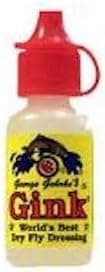
Gehrke's Gink dry fly dressing and leader floatant, a long-trusted gel that keeps dries and leaders riding high.
Price range: $ (Budget)
What we liked
- + Gel formula is quick to rub into hackle and wings
- + Also works on leaders to stop butt sections sinking
- + Gink is a staple found in many fly anglers' vests
Trade-offs
- - Too much gel can mat fine hackle and CDC feathers
- - Gel thickens in cold weather and runs in heat
Who reaches for a bottle of Gink
Gink is built for anglers fishing dry flies and wanting one product that covers both the fly and the leader butt. It is a paste that turns to a light liquid at skin temperature, which makes it easy to work between fingers before rubbing it into a fly, and it returns to a clear gel once the fly hits cold water. Because it is a gel rather than a powder, it suits anglers who like to pre-treat a fly before the first cast instead of touching up mid-drift with a shake bottle. It also has a long history in fly fishing circles as a go-to dressing, so newcomers who ask a shop for a floatant recommendation are often pointed toward it first. Anglers who fish delicate CDC patterns or very fine hackle dries may want to pair it with a drying powder rather than relying on gel alone for every fly in the box.
How the formula actually works
Gehrke's Gink is lighter than water, which is why it floats a fly rather than weighing it down once applied correctly. The gel is designed to permeate into the body materials of a fly, coating synthetic fibers and working into natural fur and feather so the pattern resists soaking through for a normal session on the water. That same penetrating quality is what lets it double as a leader floatant, since a small amount worked into the butt section of a leader keeps it riding in the surface film instead of sinking and dragging a dry fly under. The bottle is compact, built to fit in a vest pocket, sling pack or chest pack pocket for quick reapplication streamside. A thin film is all that is needed per fly, since the gel is concentrated rather than a light spray-on treatment.
Using it on the water and caring for the bottle
In practice, a small dab worked between two fingers and then massaged into a dry fly before the first cast is enough to keep most patterns floating through several fish. Reapplication becomes necessary after a fish is landed and handled, or after several dozen casts have pushed water into the fibers. Because the gel is temperature sensitive, it can thicken up in cold conditions, which makes it harder to spread thinly, and it can run and become more liquid in hot weather, so anglers fishing in extreme temperatures should keep the bottle out of direct sun or a hot dashboard. The small bottle size means it is easy to lose track of in a pack, so many anglers tether it with a zinger or keep it in a dedicated pocket rather than loose in a bag.
Where it wins and where it falls short
Compared with a combo product like the Gehrke's Gink and Shimazaki Dry Shake set, this standalone gel is simpler and cheaper but does not include a powder backup for flies that have already become waterlogged. Against Loon Outdoors Aquel, another popular gel floatant, Gink has the edge in brand recognition and long-standing use, while Aquel is often described as slightly less prone to matting fine materials. Powder floatants such as Frog's Fanny work better as a rescue treatment for a fly that has already sunk, since they dry and re-fluff materials rather than adding more gel on top of a wet fly. The main drawback of Gink itself is that overapplication on fine hackle or CDC feathers can clump the fibers together and reduce buoyancy rather than help it.
Verdict and who might want something else
Gehrke's Gink is a solid, no-frills choice for anglers who want one small bottle that treats both flies and leaders and who are fishing standard dry fly patterns like Parachute Adams or elk hair caddis. It earns our score of 8.9 out of 10 mostly on how well it fits the basic job of keeping a fly afloat. Anglers who fish a lot of CDC-heavy patterns, or who fish in swings of very hot and very cold weather, may want to carry a powder floatant alongside it or consider a combo kit that pairs gel with a shake powder for touch-ups. For most trout anglers fishing a mixed box of dries, though, this remains an easy first bottle to add to a vest or pack.
Frequently asked questions
Can Gehrke's Gink be used on leaders as well as flies?
Yes, a small amount worked into the butt section of a leader helps keep it riding in the surface film instead of sinking.
Will Gink damage delicate CDC feathers?
Applying too much gel can mat fine hackle and CDC fibers together, so a light touch works better on delicate patterns than a heavy coat.
Does Gink work in cold weather?
The gel can thicken in cold conditions, making it harder to spread thinly, and it can become more liquid in hot weather, so storing the bottle out of temperature extremes helps.
How is Gink different from a powder floatant like Frog's Fanny?
Gink is a gel applied before casting to prevent soaking, while powders like Frog's Fanny are typically used to dry and re-fluff a fly that has already become waterlogged.
Prices change often, so check the current price and availability on Amazon.
Check price on AmazonFly Fish Nest may earn a commission from the link above.