Gehrke's Gink and Shimazaki Dry Shake Dry Fly Floatant with Kingfisher Combo Holder Review (2026)
Updated September 14, 2026 · Research-based review
Our verdict
This kit pairs Gehrke's Gink gel with Shimazaki Dry Shake powder in a two-compartment Kingfisher holder, covering pre-treating a dry fly and reviving one already wet. Gink liquefies at skin temperature and gels again in cold water. Our score of 9.2 out of 10 reflects a well-paired combo, bulkier than one bottle.
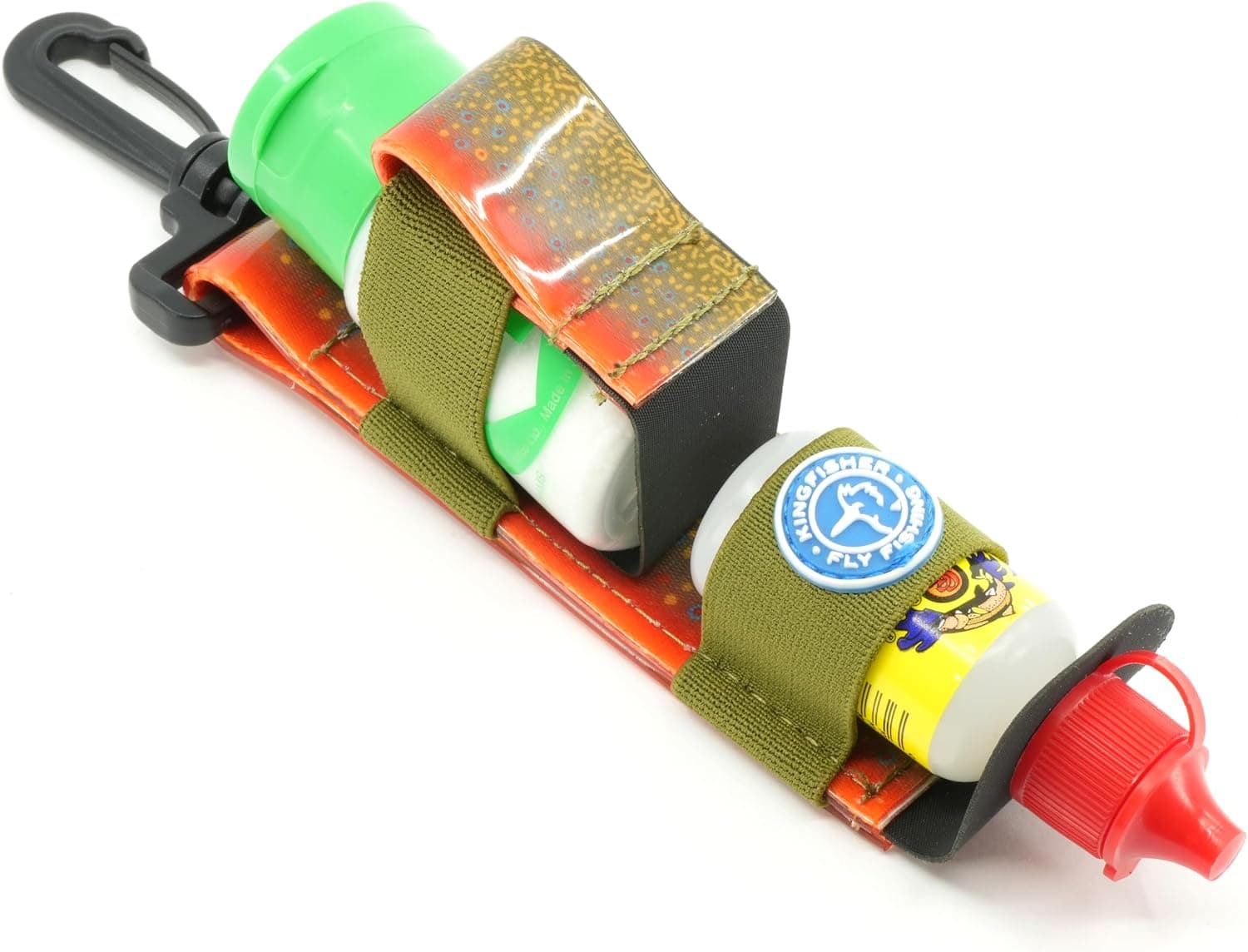
Gehrke's Gink and Shimazaki Dry Shake floatant with a Kingfisher combo holder, a gel plus powder dry fly kit.
Price range: $ (Budget)
What we liked
- + Gel and powder together cover pre-treating and reviving flies
- + Combo holder keeps both floatants organized on a vest
- + Pairs two of the most familiar floatant brands in one purchase
Trade-offs
- - Combo holder is bulkier than carrying a single bottle
- - More than a casual angler who rarely fishes dries needs
Who this floatant combo is for
This kit is built for dry fly anglers who want both stages of floatant care covered from one pouch: Gink for treating a fresh fly before it ever touches the water, and Dry Shake powder for reviving a fly that has already gone under and picked up water or fish slime. Anglers who fish dry flies through a full day, switching between fresh patterns and flies that need a quick refresh between hatches, benefit most from having both formulas within reach rather than digging through separate pockets for a gel and a powder shaker. It also suits anglers who already know and trust these two specific brands individually and want them bundled with a holder rather than sourcing a gel and a powder floatant separately. Casual anglers who rarely fish dry flies, or who only fish nymphs and streamers, will find this combo more than they need and better served by skipping floatant entirely or carrying a single small bottle.
What each floatant does and how the holder works
Gehrke's Gink is a paste-style floatant sold in a squeeze bottle that, according to the manufacturer, turns to a liquid at skin temperature so it spreads easily onto a fly with your fingers, then returns to a clear, unseen gel once it contacts cold stream water, keeping the fly from soaking through. Shimazaki Dry Shake is a powder floatant you shake a wet fly inside, which both dries the fly out and redeposits a water-repelling coating on the hackle and body, making it the tool of choice for reviving a fly after a fish has been caught or after repeated casts have waterlogged it. The Kingfisher combo holder keeps both products in two separate compartments with a leak-proof, spill-resistant design, so the gel and the powder stay contained and organized on a vest or in a pack instead of rattling around loose or leaking into each other.
Using both floatants together on the water
A typical routine is to apply a small amount of Gink to a dry fly before your first cast, working it lightly into the hackle and body so the fly floats high from the start, then switch to the Dry Shake powder once the fly has taken a fish or become waterlogged from repeated drifts. To use Dry Shake, drop the wet fly into the powder compartment, give it a light shake, and tap off the excess before your next cast, which restores buoyancy faster than trying to re-apply gel to an already-wet fly. Keep the holder's compartments closed between uses to prevent the powder from clumping in humid conditions and to keep the gel from drying out at the nozzle. Because the holder is built for freshwater and saltwater environments, rinsing it occasionally and letting both compartments dry fully helps prevent residue buildup around the openings over a season of use.
How this combo compares with single-formula floatants
In the site's fly floatant guide this Gink and Dry Shake combo ranks first of eight, ahead of Gehrke's standalone Gink at 8.9 and Loon Outdoors' Aquel gel floatant at 8.6, both of which are single-formula gel products without a powder companion. The advantage of this combo over a standalone gel is having a dedicated revival tool on hand for flies that have already gotten wet, something a gel-only floatant is not designed to fix quickly once a fly is soaked through. The trade-off is bulk: carrying two floatants and a combo holder takes up more room in a vest pocket than a single Gink bottle, and the combo is more than a casual angler who rarely fishes dries will need. For anglers who fish dry flies seriously enough to want both a pre-treatment and a revival option, the pairing explains why it edges out single-formula floatants in the guide.
Verdict and who should stick with one floatant
Choose this combo if you fish dry flies often enough to want both a gel for pre-treating fresh flies and a powder for reviving waterlogged ones, and you like the convenience of a single holder keeping both organized rather than carrying separate containers. It is a strong pick for anglers who already trust the Gink and Dry Shake brands individually and want them paired without extra shopping. Anglers who only occasionally fish dries, or who prefer to keep their vest pockets as light as possible, may be better served by a single small bottle of Gink or a standalone Dry Shake shaker rather than the full combo. For serious dry fly anglers, this pairing's top ranking in the site's floatant guide reflects genuinely complementary tools rather than a redundant bundle.
Frequently asked questions
What is the difference between Gink and Dry Shake in this combo?
Gink is a gel paste you apply to a dry fly before fishing it, while Dry Shake is a powder you shake a wet fly in afterward to dry and re-treat it, so together they cover pre-treatment and revival.
Do the two floatants stay separated in the holder?
Yes, the Kingfisher combo holder has two separate, leak-proof compartments, one for the Gink gel and one for the Dry Shake powder, so they do not mix or leak into each other.
How does Gink stay effective on the stream?
According to the manufacturer, Gink turns to a liquid at skin temperature for easy application, then returns to a clear gel on contact with cold stream water, which keeps the fly from soaking through.
Is this combo worth it if I only fish dry flies occasionally?
It is more floatant and holder than an occasional dry fly angler typically needs, so a single small bottle of Gink or a standalone powder shaker may be a simpler choice for infrequent use.
Prices change often, so check the current price and availability on Amazon.
Check price on AmazonFly Fish Nest may earn a commission from the link above.