Cortland Gel Spun Fly Line Backing 300 Yards 30 LB White Review (2026)
Updated September 14, 2026 · Research-based review
Our verdict
Cortland's 30 lb gel spun backing suits anglers spooling reels for salmon, steelhead or large trout who want maximum backing capacity on a mid-size arbor. The main strength is its thin diameter for the strength, the trade-off is that gel spun material needs specific knots to avoid slipping.
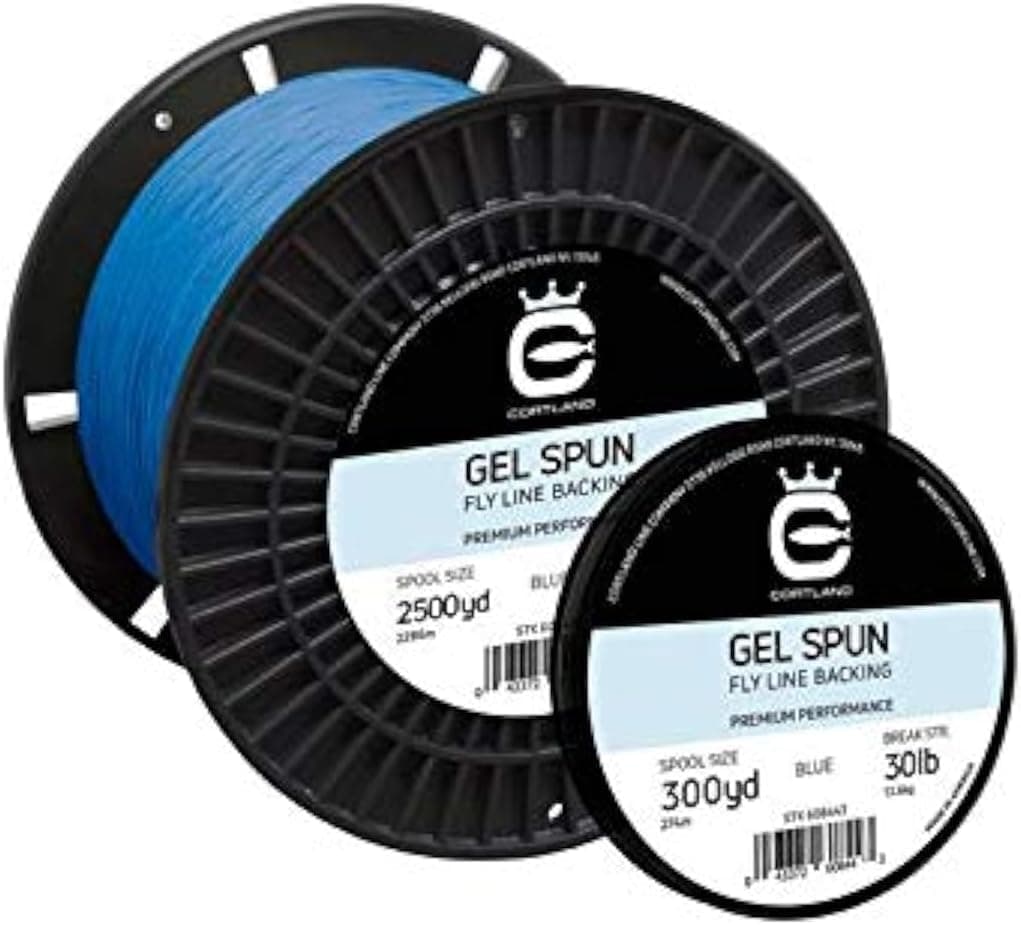
Cortland gel spun 300 Yards 30 LB white backing, a thin, strong backing for saltwater reels and long running fish.
Price range: $ (Budget)
What we liked
- + Gel spun has a thin diameter so more backing fits on the reel
- + 300 Yards of 30 LB backing suits saltwater and big game rods
- + White color is easy to mark and spot on the spool
Trade-offs
- - Gel spun needs special knots to prevent slipping
- - Thin line can cut into itself if not wound on tightly
Who needs gel spun backing over standard Dacron
This backing is aimed at anglers who want to fit more running line onto a reel than a standard braided Dacron backing allows, typically because they are targeting fish capable of long runs like salmon, steelhead or large resident trout. Gel spun fiber is thinner than Dacron at the same rated strength, so an angler with a reel that is tight on backing capacity, or who wants extra insurance against being spooled, gains real room by switching. It is less necessary for someone fishing small stillwaters or short freestone streams for average-size trout, where a fish is unlikely to strip more than a rod's length of line. Anglers upgrading an existing saltwater or big-river reel setup, rather than building a first trout rig, are the more typical buyer for this specific 30 lb spool.
Material, diameter and what is on the spool
The backing is made from gel spun fibers, an ultra-high-strength material braided into a tight, round line rather than a looser weave, which is what lets it pack more length onto a given spool size. At 30 lb, Cortland lists the diameter at roughly .012 inches, noticeably thinner than a Dacron backing rated to the same strength, and the line ships in white on a 300-yard spool for this listing, with other strengths and a longer 1500-yard option also sold separately. The braid construction resists abrasion and UV degradation better than some lighter materials, which matters for backing that can sit loaded on a reel for years between full respools. Because the fiber is thin and slick, however, it behaves differently on the reel than traditional Dacron, both when winding it on and when a fish is peeling it off under pressure.
Spooling it and keeping it fishing well
Because gel spun line is thin and has a slicker surface than Dacron, it needs to be wound onto the reel under firm, even tension; loose winds can let the material dig into itself under load from a hard-running fish, which can bind the spool or damage the backing. Anglers who have not worked with gel spun before should also use knots rated for slick, high-strength braids, since standard knots that hold fine on Dacron can slip on gel spun material. Once spooled correctly and paired with a properly tied connection to the fly line, the backing itself needs little maintenance beyond an occasional check for wear near the reel's spool arbor, where friction is highest during long runs.
How it stacks up against other backing options
Compared with RIO's Dacron backing, a widely used standard, this Cortland gel spun line offers noticeably more capacity for the same spool space thanks to its thinner diameter, though RIO's braided Dacron is generally considered easier for less experienced anglers to knot and handle. Against Scientific Anglers' Dacron backing, a similarly mainstream choice, the trade-off is the same: gel spun buys capacity at the cost of needing more careful knotting. Cortland's own Micron backing, a thinner braided nylon option, sits between the two in both price and handling, without matching the raw capacity advantage of gel spun. For anglers who do not need the extra room, a standard Dacron backing remains the simpler, more forgiving choice.
Verdict and who should pick differently
This Cortland Gel Spun backing earns strong marks for anglers who specifically need maximum capacity on a reel used for big freshwater fish, and it delivers on that thin-diameter promise reliably. Anglers targeting salmon, steelhead or large trout on 8 to 12 weight outfits are the clearest fit. Casual trout anglers fishing small water, or anyone who wants a backing that behaves more predictably with basic knots, should stick with a standard Dacron backing like RIO's or Scientific Anglers' instead, since the capacity advantage of gel spun matters less when a fish is unlikely to run deep into the backing in the first place.
Frequently asked questions
What diameter is the 30 lb Cortland gel spun backing?
Cortland lists it at roughly .012 inches in diameter, thinner than a standard Dacron backing rated to the same strength.
What reel weight class does 30 lb backing suit?
It tends to pair well with reels and lines in the 8 to 12 weight class, aimed at bigger freshwater species like salmon, steelhead and large trout.
Does gel spun backing need special knots?
Yes, gel spun material is thin and slick, so knots rated for slippery high-strength braids should be used instead of standard knots that work fine on Dacron.
Is gel spun backing better than Dacron for every angler?
Not necessarily; Dacron is easier to handle and knot for most anglers, and gel spun mainly pays off when extra backing capacity on the reel is genuinely needed.
Prices change often, so check the current price and availability on Amazon.
Check price on AmazonFly Fish Nest may earn a commission from the link above.